Full-Stack Web App
Build a full-stack web application with a Vite/React frontend and Hummingbird backend on WendyOS
Building a Full-Stack Web App
Source Code: The complete source code for this example is available at github.com/wendylabsinc/samples/swift/web-app
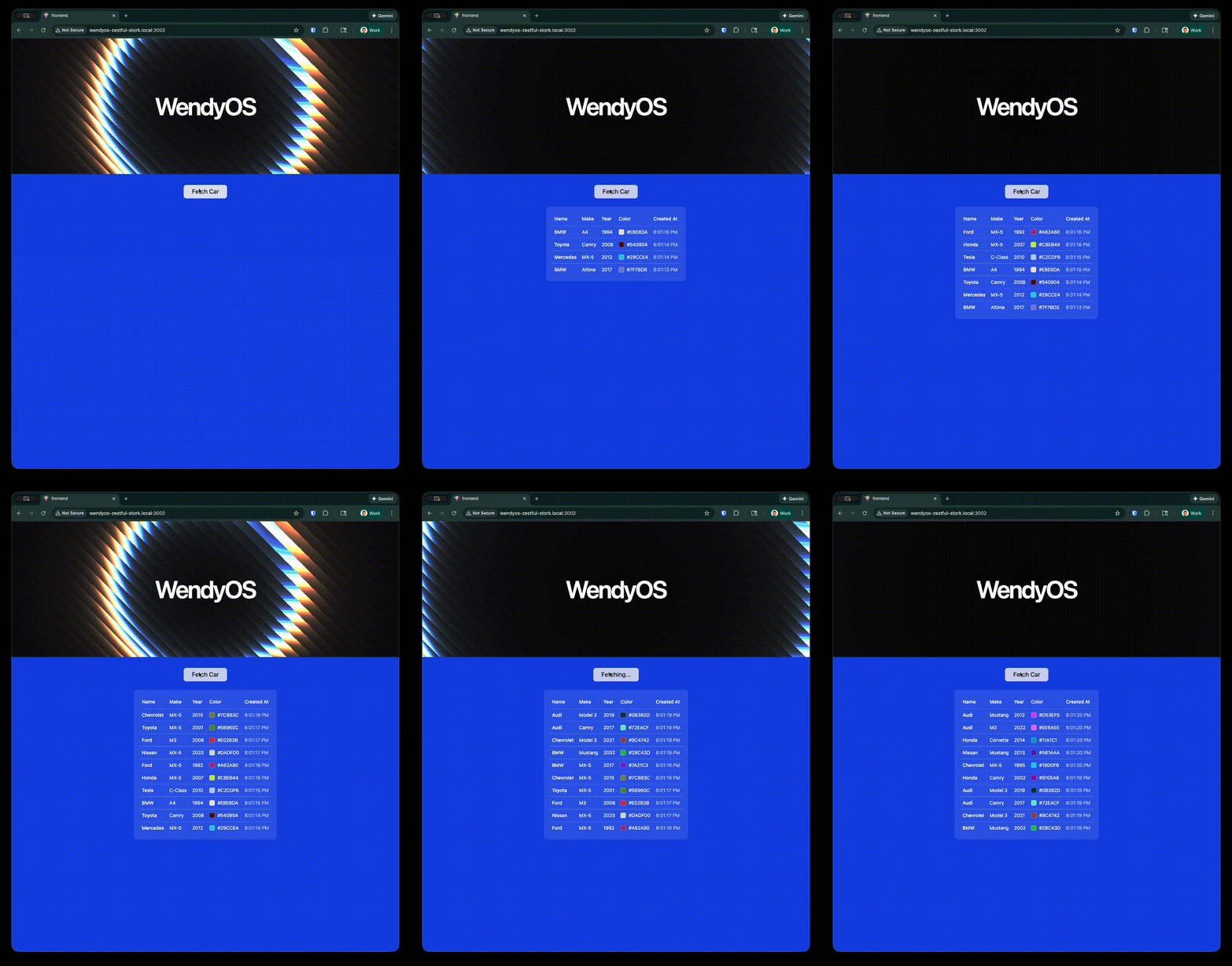
In this guide, we'll build a complete web application with a modern React frontend (using Vite, TypeScript, and shadcn/ui) and a Hummingbird backend. The app displays an animated shader background with "WendyOS" text and includes an interactive feature to fetch and display random car data from an API.
This demonstrates how to:
- Serve a production-built React frontend from a Swift backend
- Create API endpoints that the frontend can consume
- Deploy the entire stack as a single container to your WendyOS device
Prerequisites
- Wendy CLI installed on your development machine
- Node.js 22+ and npm installed (for building the frontend)
- Swift 6.2 installed via swiftly (Xcode's Swift is not supported)
- A WendyOS device plugged in over USB or connectable over Wi-Fi
Project Structure
web-app/
├── Dockerfile
├── wendy.json
├── frontend/           # Vite + React + TypeScript + shadcn/ui
│   ├── package.json
│   ├── src/
│   │   ├── App.tsx
│   │   └── components/
│   └── ...
└── server/             # Hummingbird backend
    ├── Package.swift
    └── Sources/
        └── web-app-server/
            └── main.swift
Setting Up Your Project
Initialize the Project
Start from the Wendy full-stack Swift template:
wendy init web-app --target wendyos --language swift --template fullstack --var APP_ID=web-app --var PORT=8000 --var SWIFT_VERSION=6.3 --assistant skip --git-init no
cd web-app
The template creates wendy.json, the Dockerfile, frontend files, and Swift backend files. The sections below explain how the generated full-stack app fits together.
Run on WendyOS
wendy runWendy will build the app, ask you to select a device if one is not already configured, deploy the app, and print the URL or run output.
Code Breakdown
Generated Frontend
The template includes a Vite React TypeScript frontend:
cd frontend
npm create vite@latest . -- --template react-ts
npm install
npm install -D tailwindcss @tailwindcss/vite
Initialize shadcn/ui:
npx shadcn@latest init --defaults
npx shadcn@latest add button table
Build the frontend:
npm run build
cd ..
Generated Hummingbird Backend
The generated server/Package.swift describes the backend:
// swift-tools-version: 6.2

import PackageDescription

let package = Package(
    name: "web-app-server",
    platforms: [
        .macOS(.v14)
    ],
    dependencies: [
        .package(url: "https://github.com/hummingbird-project/hummingbird.git", from: "2.0.0"),
    ],
    targets: [
        .executableTarget(
            name: "web-app-server",
            dependencies: [
                .product(name: "Hummingbird", package: "hummingbird")
            ]
        )
    ]
)
The generated server/Sources/web-app-server/main.swift handles the API:
import Foundation
import Hummingbird

struct Car: ResponseEncodable {
    let name: String
    let make: String
    let year: Int
    let color: String
    let createdAt: String
}

let carNames = ["Honda", "Toyota", "Ford", "Chevrolet", "BMW", "Mercedes", "Audi", "Tesla", "Nissan", "Mazda"]
let carMakes = ["Civic", "Camry", "Mustang", "Corvette", "M3", "C-Class", "A4", "Model 3", "Altima", "MX-5"]

func randomCar() -> Car {
    let formatter = ISO8601DateFormatter()
    formatter.formatOptions = [.withInternetDateTime, .withFractionalSeconds]
    return Car(
        name: carNames.randomElement()!,
        make: carMakes.randomElement()!,
        year: Int.random(in: 1990...2024),
        color: String(format: "#%06X", Int.random(in: 0...0xFFFFFF)),
        createdAt: formatter.string(from: Date())
    )
}

@main
struct WebAppServer {
    static func main() async throws {
        let hostname = ProcessInfo.processInfo.environment["WENDY_HOSTNAME"] ?? "0.0.0.0"

        // Determine frontend dist path
        let containerPath = "/app/frontend/dist"
        let frontendDist = ProcessInfo.processInfo.environment["FRONTEND_DIST"]
            ?? (FileManager.default.fileExists(atPath: containerPath + "/index.html") ? containerPath : "../frontend/dist")

        print("Serving frontend from: \(frontendDist)")

        let router = Router()

        // API route for random car
        router.get("/api/random-car") { _, _ in
            return randomCar()
        }

        // Serve static files using FileMiddleware
        router.add(middleware: FileMiddleware(frontendDist, searchForIndexHtml: true))

        // Bind to 0.0.0.0 to accept connections from all interfaces (required for container networking)
        let app = Application(
            router: router,
            configuration: .init(address: .hostname("0.0.0.0", port: 6002))
        )

        print("Server running on http://\(hostname):6002")
        try await app.runService()
    }
}FileMiddleware: Hummingbird's FileMiddleware automatically serves static files from the specified directory. The searchForIndexHtml: true option serves index.html for directory requests, enabling SPA routing.
Generated Dockerfile
The generated project includes a Dockerfile:
# Build frontend
FROM node:22-slim AS frontend-builder

WORKDIR /app/frontend
COPY frontend/package*.json ./
RUN npm ci
COPY frontend/ ./
RUN npm run build

# Build Swift server
FROM swift:6.2.3-noble AS swift-builder

WORKDIR /app
COPY server/Package.swift server/Package.resolved* ./
COPY server/Sources ./Sources

RUN swift build -c release

# Runtime stage
FROM swift:6.2.3-noble-slim

WORKDIR /app

COPY --from=swift-builder /app/.build/release/web-app-server /usr/local/bin/web-app-server
COPY --from=frontend-builder /app/frontend/dist ./frontend/dist

ENV FRONTEND_DIST=/app/frontend/dist

EXPOSE 6002

CMD ["web-app-server"]
Generated wendy.json
Review the generated wendy.json file:
{
  "appId": "com.example.swift-web-app",
  "version": "0.0.1",
  "entitlements": [
    { "type": "network" }
  ],
  "readiness": {
    "tcpSocket": { "port": 6002 },
    "timeoutSeconds": 30
  },
  "hooks": {
    "postStart": {
      "cli": "wendy utils open-browser http://${WENDY_HOSTNAME}:6002"
    }
  }
}
The readiness probe tells the CLI to wait until port 6002 is accepting connections before proceeding. The postStart hook automatically opens your browser once the app is ready.
Run Again on WendyOS
Deploy your full-stack web application to your WendyOS device:
wendy runTest Your Web App
Your browser will open automatically once the app is ready, thanks to the postStart hook. If it doesn't, navigate to:
http://wendyos-true-probe.local:6002Replace the hostname: Each WendyOS device has a unique hostname. Replace wendyos-true-probe with your device's actual hostname shown in the CLI output.
Test the API Directly
curl http://wendyos-true-probe.local:6002/api/random-carResponse:
{"name":"Toyota","make":"Camry","year":2015,"color":"#A4F2C1","createdAt":"2024-01-15T10:30:00.000Z"}Learn More
Next Steps
Now that you have a full-stack web app running:
- Add more API endpoints for CRUD operations
- Implement real-time updates with WebSockets
- Connect to WendyOS device sensors and display data in the UI
- Add authentication middleware
- Use a database for persistent storage